Custom of the house
Marks go down in an order the sheet can survive.
The chart desk is a wooden table under a copper lamp, cleared before anyone sits. Technical analysis training here is the sequence of pencil on a printed pack: structure, one level, then a stop.
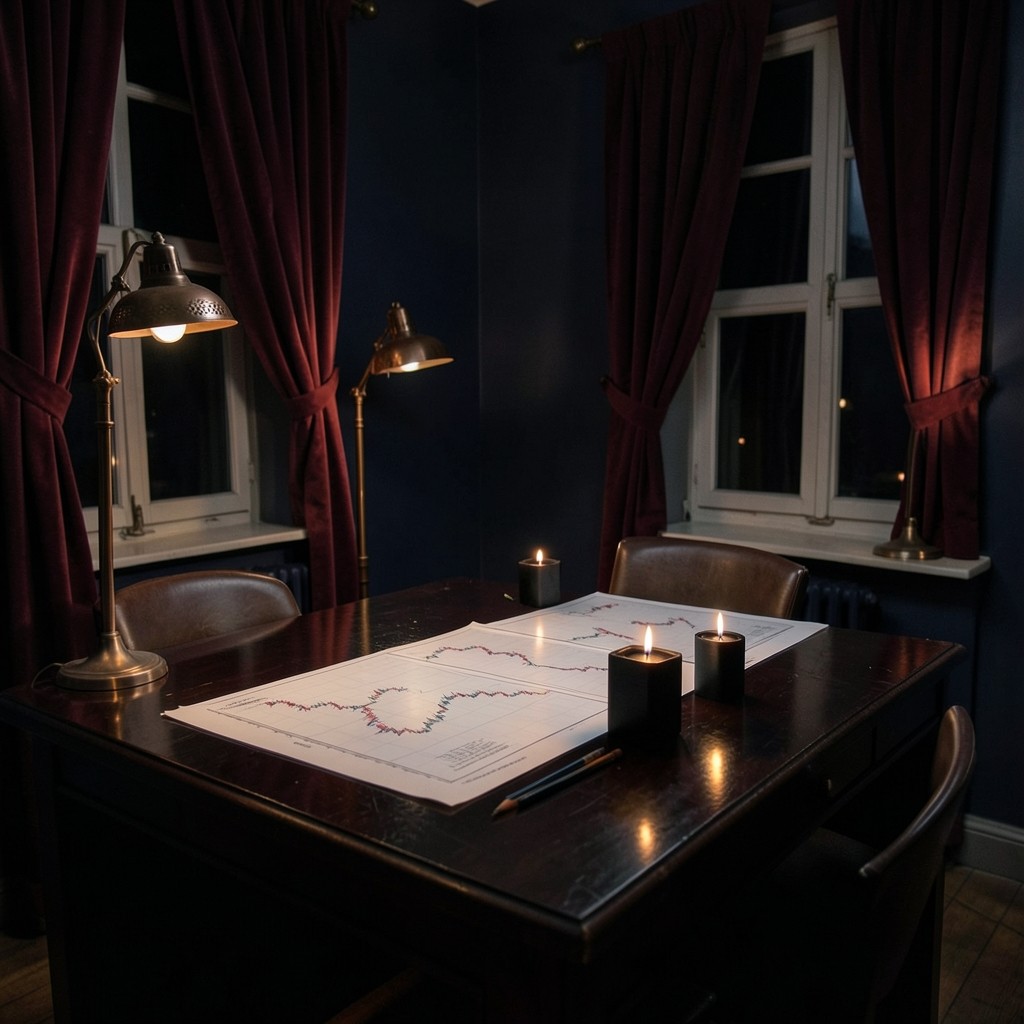
What is on the table
Twelve sheets at most, clipped at the corner. A soft pencil, a harder pencil for margins, a straightedge, and a scrap sheet for sentences that are not ready to touch the chart. The window is covered enough that the lamp, not the street, decides the light. Phones stay in the coat hook by the door during a desk hour. Thursday’s circle uses the same table with six sheets instead of one student’s pack.
The order, and why it is stubborn
Structure first means swing highs and swing lows on the bar size you named when you booked. Students who begin with a favorite level usually discover, halfway through, that the swings do not respect it. Starting there saves the argument. The second pass is allowed one level the session actually used: a prior high, a range edge, an open that price kept returning to. The third act is refusal. When the sheet cannot be read from the door, the keepers are traced onto fresh paper.
Journal words enter only at the end, and only if you brought a page. The desk hour itself is not a journal review. If the note in your book and the mark on the sheet use different names for the same line, that mismatch is written in the margin and left for a review sitting.
Days
Private desk hours are Wednesdays. Journal sittings are Tuesdays and Fridays. The markup circle is Thursday, 19:00 to 21:00, six seats. Monday and the weekend the room is dark. Public holidays in Korea close the book for that day; if yours is affected we offer another date rather than a shortened hour.
If you want the hour, say daily or thirty-minute, and whether the room should print the pack.